
The minimal tables
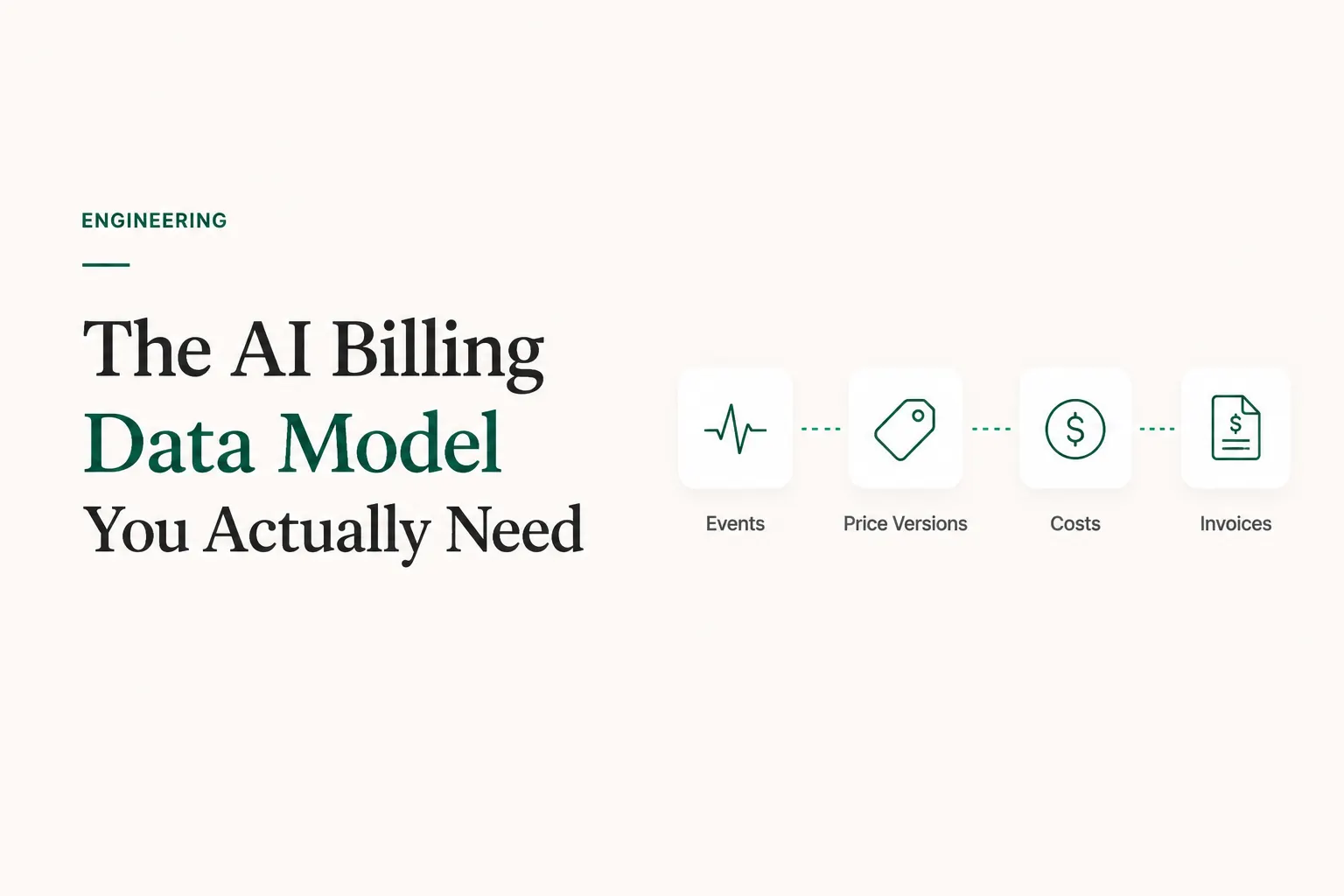
- Customers, Accounts, Subscriptions
- Agents & Signals (events you meter)
- UsageEvents (immutable, versioned)
- Costs (vendor, rate, allocation)
- PriceVersions (effective_at, rules)
- Invoices & LineItems (ties to usage + outcomes)
Event example (JSON)
{
  "customer_id": "acme",
  "agent_id": "outbound_v2",
  "signal": "meeting_held",
  "quantity": 1,
  "metadata": {"duration_min": 27, "attendee_role": "VP Sales"},
  "occurred_at": "2025-08-28T09:15:00Z",
  "price_version": "v1.3"
}
Cost example (allocation)
- LLM tokens → workflow step → customer.
- RAG queries/minutes → feature → customer.
- Storage/egress → monthly proration → customer.
Rev-rec pointers
- Usage lines: recognize on consumption.
- Outcome lines: recognize on completion/acceptance.
- Commitments: recognize over term; overages as consumed.
Why this model future-proofs you
You can switch value metrics, add outcomes, or re-price without data migrations—just add a new PriceVersion and keep the event log immutable.
Want the full schema (SQL) as a downloadable? Ping us—we’ll share the UnitPay starter pack.